In Singapore, humidity affects sofas quietly, settling beneath clean-looking fabric until musty smells, stains, dampness or hidden moisture start to appear.
The problem gathers in slow-drying foam cores, stitched seams, cushion gaps and underside fabric, where trapped moisture feeds odours, allergens and stains.
In this article, we’ll trace how Singapore’s humid climate affects sofas and upholstered furniture, from hidden moisture to warning signs and material-specific care.
Let’s get into the hidden ways humidity affects your sofa.
Why Singapore’s Humidity Affects Sofas and Upholstered Furniture More Easily
Humidity does not only sit in the air. It moves into soft materials, especially sofas with fabric covers, foam cushions, seams, piping and covered undersides.
According to the Meteorological Service Singapore, the country’s mean annual relative humidity is around 82%, and it can frequently reach 100% during prolonged rain. This constant moisture helps explain why sofas and upholstered furniture can feel damp, smell musty, or take longer to dry than they would in drier climates.
Unlike hard furniture, upholstery does not simply dry from the surface. Moisture can stay in the foam core, along stitched edges, under removable cushions and near the sofa base, where air moves slowly.
That is why the first warning sign is often not a visible stain, but a faint sour or musty smell when you sit down. In humid homes, the problem usually starts in quiet spots such as corners, walls behind sofas, enclosed balconies, or rooms cooled by air conditioning but rarely aired out.
7 Ways Singapore’s Humidity Affects Sofas and Upholstered Furniture
Upholstery does not need to feel damp for humidity to affect it. In a humid home, moisture can settle into the parts that receive the least airflow but the most daily contact, such as cushion backs, stitched seams, piping, foam edges, underside fabric and the tight space between the sofa and wall.
Now let’s look at the seven ways that hidden build-up can affect your sofa before the damage becomes obvious:
1. Moisture Gets Trapped Inside Fabric and Foam
Upholstery can hold dampness in places you rarely touch, such as the cushion core, inner seams, back panels and the thin fabric underneath the sofa.
These areas dry slowly because air moves across the surface, not through the deeper layers. That hidden moisture can later trigger odours, stains and slower drying from within the sofa
2. Musty Smells and Damp Odours Become More Noticeable
The first sign of a humidity problem is often smell, not a stain. When sweat, body oils, food crumbs or pet residue sit in damp upholstery, they can create a stale odour that returns even after light cleaning.
This smell is usually strongest after rain, overnight aircon use, or when the sofa has been left in a closed room.
3. Mould and Mildew Can Grow in Hidden Areas
Hidden growth often begins where no one thinks to check, like the back edge of a cushion, the strip of fabric under the sofa, or the side facing a wall.
Those spots stay slightly damp longer because they get less light, less movement and less fresh air.
4. Dust Mites and Allergens Become Harder to Control
Daily use leaves more behind than most people notice, especially when damp fabric holds warmth, sweat residue and soft debris between fibres.
Skin flakes, pet dander and fine particles settle into the fabric, giving dust mites and allergens a place to build up between regular vacuuming.
5. Stains Can Reappear After Cleaning
A small spill can look fully removed at first, then return as a faint ring or patch once the sofa dries.
This often happens when moisture pulls old residue from deeper layers back up through the fabric. In a humid room, that drying process can take longer, giving stains more time to travel upward.
6. Fabric, Leather and Faux Leather May Wear Faster
Different sofa materials react to damp air in different ways, which is why one sofa may fade, another may feel sticky, and another may start peeling at the edges.
Fabric, leather and faux leather wear faster on armrests, headrests and favourite seats, where moisture, body oils, aircon dryness and friction meet.
7. Sofas Take Longer to Dry After Spills or Cleaning
The surface can feel dry while the lower cushion layers still hold moisture after spills, spot treatments or DIY shampooing reaches the foam.
Slow drying can hide leftover moisture, so airflow, careful blotting and lighter water use help prevent odours or marks after cleaning.
How to Tell if Your Sofa Has A Humidity Problem
A sofa affected by indoor moisture will not always look dirty, but it often gives itself away through small changes in smell, texture, drying time and how the room feels after the sofa has been used.
Here are the warning signs worth checking before the problem settles deeper into the upholstery:
- The sofa smells musty after the room has been shut for a while. That closed-room smell often shows up first because damp fabric, body oils and old residue become more noticeable when air is not moving.
- Certain spots feel cool, clammy or slightly sticky. Pay attention to armrests, cushion edges and the backrest, as these are the areas that collect the most sweat, skin contact and daily use.
- Tiny specks show up where air rarely reaches. Check the sofa back, underside, stitched seams, loose covers and the edge facing the wall, where dust and dampness can sit quietly.
- A stain fades, then returns as a pale ring or shadow. This usually means moisture has pulled old residue from inside the upholstery back towards the surface while drying.
- You feel sneezy, itchy or stuffy after sitting down. That pattern can point to dust, skin flakes, pet dander or fine allergens sitting deep in the fabric, not just loose dust on top.
How to Protect Your Sofa From Humidity in Singapore
Protecting your sofa from humidity is not about doing one heavy clean now and then, but about stopping moisture from returning to the same overlooked spots each week, especially cushion gaps, stitched seams, wall-facing panels and rooms that stay closed for long hours.
With that in mind, here are practical ways to keep your sofa drier and fresher:
- Leave a clear air gap behind the sofa. Give the sofa a few centimetres of space from the wall, especially near windows, balcony doors or shaded corners where air sits still.
- Start airflow before the sofa feels damp. Use a fan, open windows when weather allows, or run the air conditioner in dry mode after rainy periods.
- Vacuum seams and cushion gaps. Dust, skin flakes and crumbs collect in narrow spaces where moisture can make smells worse.
- Blot spills quickly. Press with a clean cloth, avoid rubbing, then dry the area with airflow.
- Avoid soaking the sofa during DIY cleaning. Too much water can push dirt deeper into the upholstery.
- Check hidden areas after rainy weeks. Look behind the sofa, under covers and near the base.
- Call a professional when odours keep returning. The issue may be below the surface.
Sofa Care Checklist for Singapore Homes
A useful sofa care routine should match how moisture actually behaves at home, which means checking the areas that stay hidden, touched often, or slow to dry after rain, spills and cleaning.
With that in mind, use this checklist to keep small humidity problems from turning into smells, stains or deeper upholstery issues:
Frequency | What To Do | Why It Matters |
Weekly | Vacuum the seat, backrest, armrests, seams and cushion gaps. | Dust, crumbs, skin flakes and pet dander can hold odours when moisture builds up. |
Monthly | Pull the sofa slightly forward and check the back, underside and wall-facing panels. | These low-airflow areas often show dampness or mould spots before the visible seat does. |
After Spills | Blot the area with a clean cloth, avoid rubbing, then dry with airflow. | Rubbing pushes liquid deeper, while airflow helps stop moisture from settling in the foam. |
After Rainy Periods | Air the room, run a fan or use dry mode, then check cushions for musty smells. | Damp weather can leave upholstery feeling fine on top while moisture lingers underneath. |
When DIY Care is Enough and When to Call A Professional
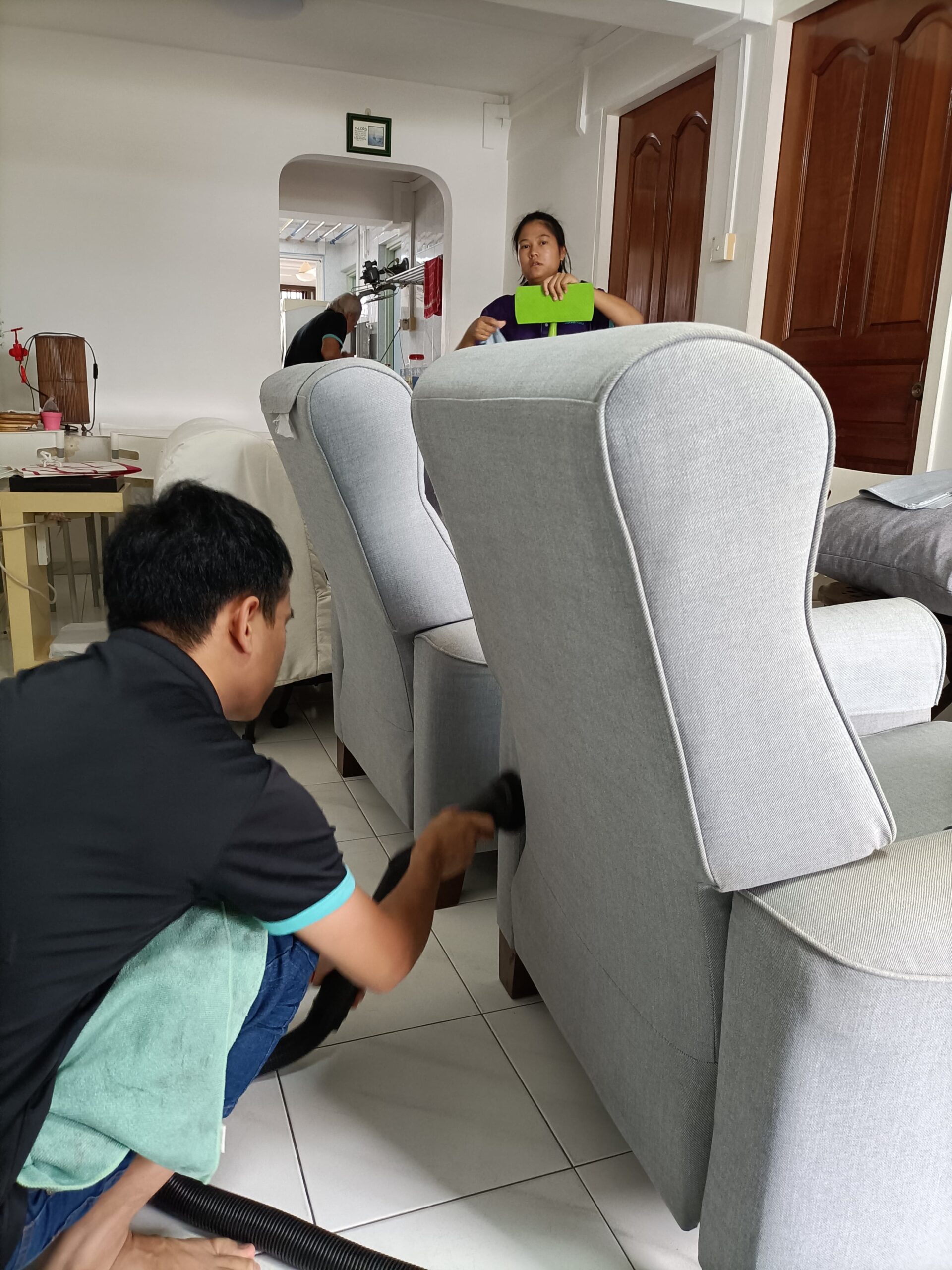
The easiest way to decide is to look at how deep the problem has gone, because surface dust, fresh spills and light smells behave very differently from moisture, odours or stains sitting inside the upholstery.
Here are the key decision points to help you choose between simple home care and professional sofa cleaning:
When DIY Care Is Enough:
- Surface dust, crumbs or pet hair are usually manageable at home. Vacuuming, airing and light spot-cleaning should improve the sofa when the issue is still sitting on the surface.
- Fresh, small spills can often be handled quickly. Blotting can stop the liquid from spreading, especially if the fabric does not stay cool, damp or heavy afterwards.
- Some stains only need careful home care. If the mark lifts cleanly and does not return as a shadow, patch or outline after drying, DIY care is usually enough.
When To Call A Professional:
- A musty smell keeps returning after airing or light cleaning. This usually means the problem is sitting deeper in the upholstery, not just on the surface.
- The sofa still feels damp hours after a spill or spot treatment. Moisture may have reached the foam, where it can dry slowly and cause odours or marks.
- Marks appear in hidden or low-airflow areas. Stains or specks along seams, under loose covers, behind the sofa or near the base usually need closer professional attention.
How Total Cleanz Supports Cleaner Sofas in Singapore’s Humid Climate
Humidity-related sofa issues are not usually fixed by cleaning the surface alone. In Singapore’s damp climate, sweat, spills, dust and residue often settle deeper into cushion gaps, seams, back panels, underside fabric and favourite seats.
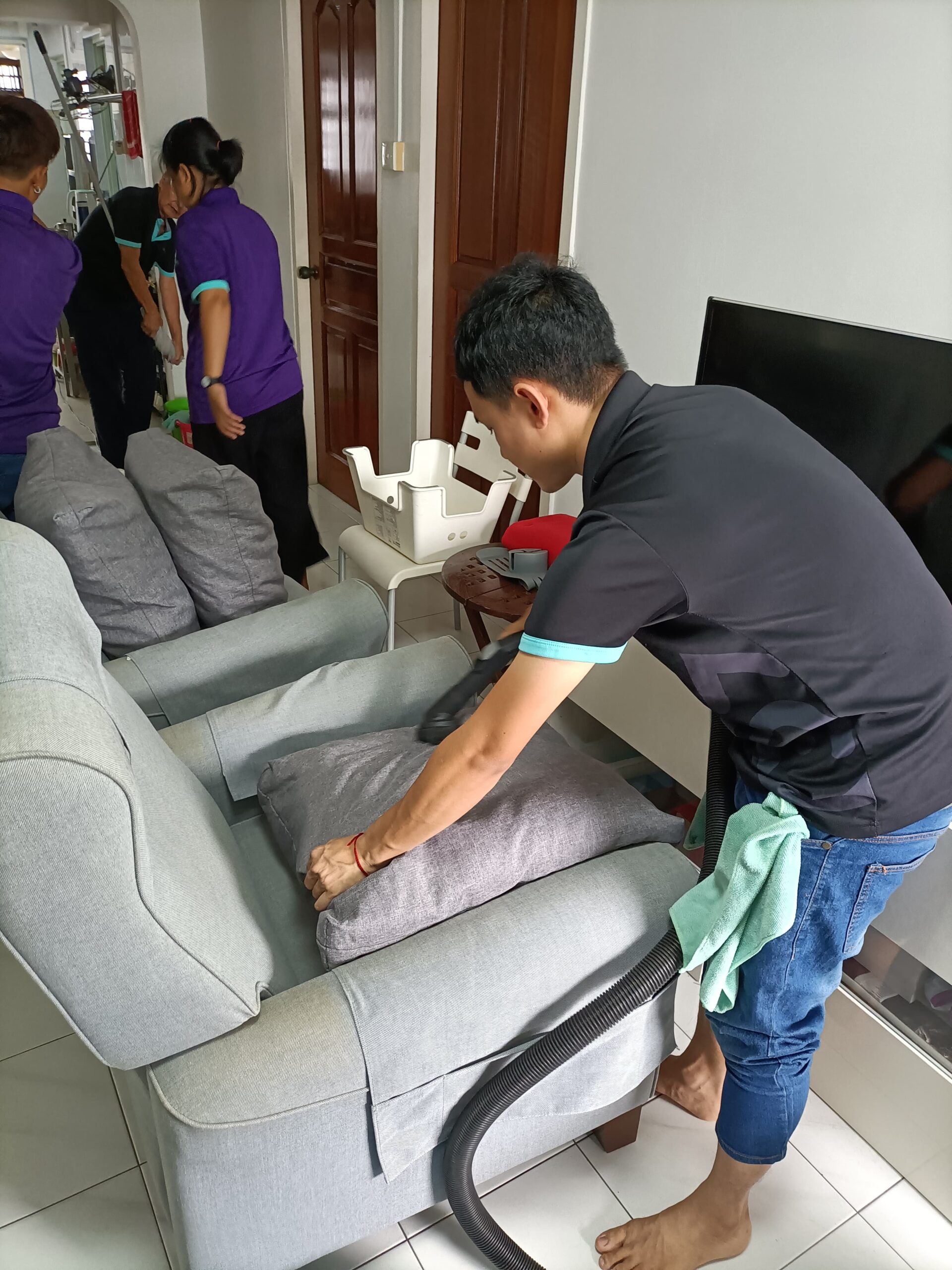
Total Cleanz takes a more structured approach to sofa cleaning, beginning with our pre-inspection and consultation rather than rushing into the wash. Our team checks the sofa’s condition, material and problem areas first, so fabric, velvet and leather upholstery are cleaned using methods that suit them.
For fabric sofas, steam or shampoo cleaning loosens embedded dirt, allergens, dust mites and stains from the fibres. Spot treatment targets drink marks, pet residue and recurring patches, while extraction removes loosened grime instead of pushing moisture deeper into the sofa.
Leather sofas are handled differently, with careful cleaning and conditioning to help protect the surface from dryness, fading and cracking. After cleaning, drying support, deodorising, and post-cleaning inspection, help prevent lingering dampness, musty smells and uncertainty, leaving the sofa cleaner, fresher, and better cared for after every visit.
FAQs
Can Sofa Covers Prevent Humidity Problems?
Yes, washable covers help with dust and spills, but thick or plastic covers can trap moisture if the sofa is not aired regularly.
Should I Use A Dehumidifier Beside My Sofa?
It can help in closed or damp rooms, but airflow still matters because moisture can linger behind cushions, walls and sofa bases.
Can Air-Conditioned Rooms Still Make Sofas Feel Sticky?
Yes, air conditioning cools the room, but body oils, cleaning residue and damp air can still make fabric or faux leather feel tacky.
Can A Sofa Have Humidity Damage If It Looks Clean?
Yes, moisture can sit inside foam, seams and underside fabric before the surface shows stains, mould, dampness or odours.
Conclusion
In Singapore’s humid climate, a spotless sofa can still hold dampness inside foam cores, stitched seams, lower panels and tight wall-facing corners.
That is why it helps to know how Singapore’s humidity affects your sofas in daily use, because odours, allergens and mould-prone patches often start in the areas that routine cleaning misses.
Good sofa care is mostly about prevention, moving air behind furniture, drying spills beyond the wet mark, avoiding soaking fabric and inspecting hidden edges.
For fresher upholstery that feels comfortable again, book Total Cleanz for sofa cleaning shaped around humid homes, daily use and stubborn hidden build-up.