Your guests form an impression the moment the door opens. Shoes come off, bags are set down, and the energy of the visit is decided within seconds. This is why CNY entryway feng shui matters.
You can improve your entryway feng shui for the Chinese New Year by cleaning, decluttering, and restoring clear flow before adding décor. These steps support comfort, hygiene, and easy movement during the visiting season.
Feng shui focuses on balance and daily usability, not superstition. In an entryway, qi appears as open walkways, fresh air, and visual calm.
Here are the seven practical steps to reset your entryway for the Chinese New Year, starting with cleaning and ending with purposeful decoration.
Why the Entryway Matters During the Chinese New Year
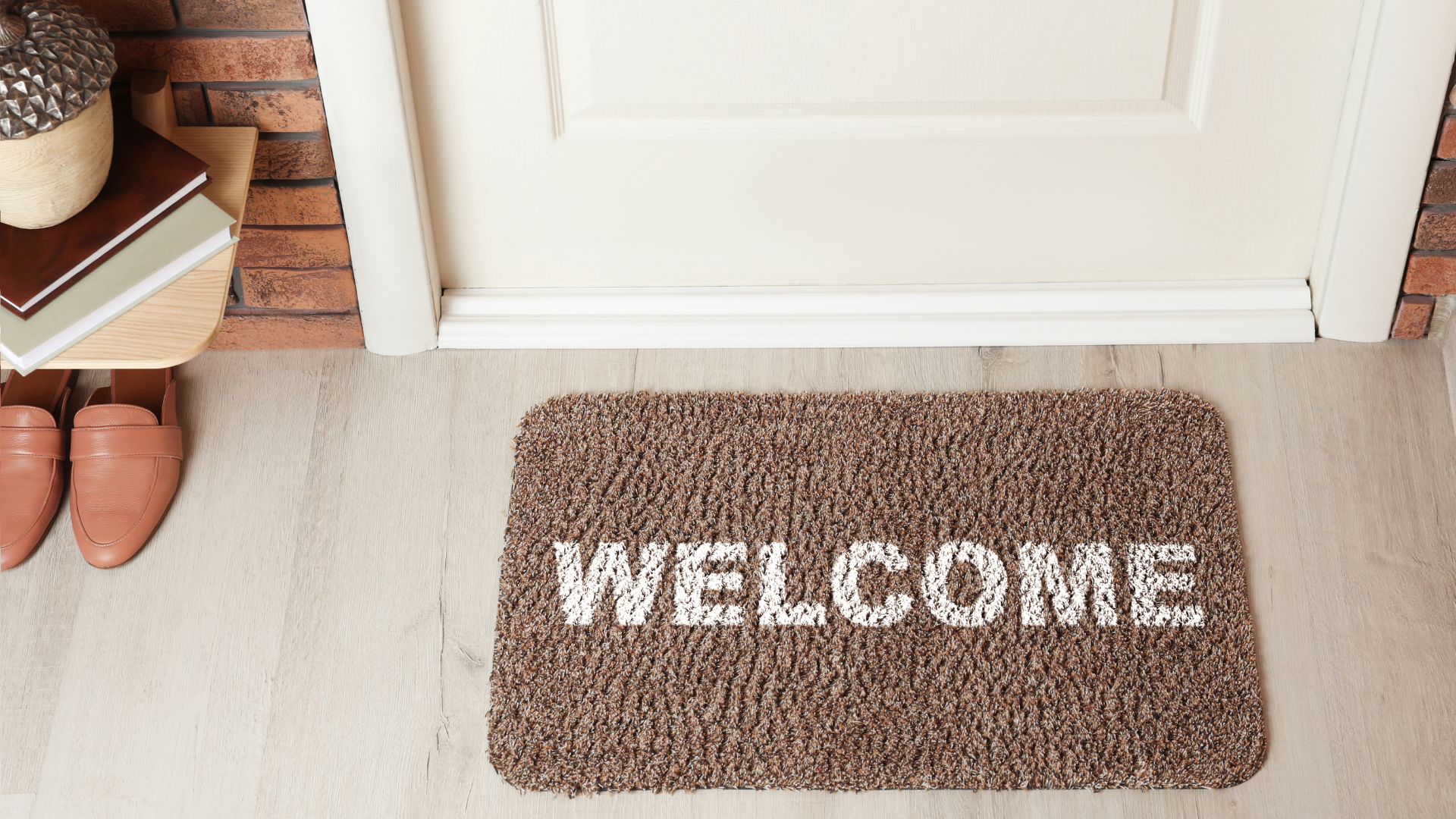
The entryway matters during the Chinese New Year because it controls first impressions, hygiene, and movement during the peak visiting season. This makes it one of the most influential spaces in the home.
It is the first area guests experience when they arrive. Shoes are removed here, bags are set down, and people pause before entering the main living areas.
During CNY, foot traffic increases significantly. Dirt, moisture, and outdoor debris are repeatedly carried in, especially in shoe-off homes. A well-prepared entryway supports:
- Cleaner indoor floors throughout the home
- Safer movement for children, elders, and guests
- Faster guest flow during busy visiting hours
- A calmer, more welcoming atmosphere
From a practical perspective, this improves comfort and hygiene. From a feng shui perspective, it supports smoother energy flow into the home.
This is why CNY entryway feng shui prioritises the entrance. Small adjustments here reduce daily friction and improve the experience for everyone.
The 7-Step Entryway Reset for CNY
You can improve your entryway for the Chinese New Year by cleaning, decluttering, and restoring clear flow before adding decoration to support hygiene, safety, and easy movement.
Here are the seven practical steps you can follow to reset your entryway for CNY.
Step 1: Declutter and Remove Blockages
You’ll feel the difference immediately when the entryway is clear and easy to move through. Declutter your entryway by first removing anything that slows you down or gets in the way, especially during busy visiting days.
Keep only daily-use shoes at the door and move the rest elsewhere. Get rid of broken footwear, unused items, and anything you’ve been meaning to “sort later”.
Clear bags and parcels from the doorway, and make sure you can walk straight in without dodging obstacles. This makes coming home and welcoming guests far more comfortable.
Step 2: Deep Clean the Threshold and Floor Zone
Once clutter is gone, focus on the dirt line between outdoors and indoors. This is where grime builds up fastest and spreads through the home.
Deep clean door tracks, grooves, and threshold strips where dust hides. Scrub grout lines, skirting boards, and corners near the door. Wash both indoor and outdoor mats, and dry them fully before placing them back.
Paying attention to this floor zone keeps dirt from travelling further inside and makes the whole entryway feel fresher the moment you step in.
Step 3: Fix Repairs Before Decorating
Before adding anything festive, take a moment to fix what already feels annoying or unsafe. Small issues are easy to ignore, but they affect daily use more than décor ever will.
Check that the door opens and closes smoothly without sticking or scraping. Tighten loose handles, locks, and hinges. Replace flickering lights and faulty switches.
Straighten warped mats or uneven flooring that could cause trips. When everything works properly, the entryway feels calmer, safer, and far more welcoming for you and your guests.
Step 4: Optimise Lighting and Visibility
Lighting at the entrance should feel bright, warm, and welcoming. In feng shui, a well-lit entryway supports positive energy and helps guests feel comfortable as soon as they arrive.
Use natural light where possible, and pair it with warm-toned lighting rather than harsh white light. Avoid fluorescent lights or fixtures with sharp, pointed designs, as they can feel cutting and uncomfortable.
If you use wall lights, avoid arranging three bulbs in a straight line, as this is traditionally considered inauspicious. Aim for balanced lighting with no dark corners so the space feels calm, open, and easy to move through.
Step 5: Restore Airflow and Freshness
Fresh air helps the entryway feel light, comfortable, and welcoming. When the air feels stale or damp, the space quickly feels heavy and unpleasant.
Start by checking and cleaning vents near the door so air can circulate properly. Dry wet shoes and mats promptly, especially in humid weather.
If you want to add plants, choose hardy, easy-care options like snake plants or pothos, which are often recommended in feng shui for supporting fresh energy. Avoid overcrowding, and keep plants dust-free so they improve airflow rather than block it.
Step 6: Add Practical Storage and Organisation
Good storage keeps the entryway functional, calm, and easy to use every day. When everything has a place, the space feels lighter and less stressful.
Limit shoe storage to what your household actually uses. Choose enclosed cabinets where possible to reduce dust and visual clutter.
Add a small tray or hook for keys, access cards, and mail so they do not end up on random surfaces. Keep one clear zone for bags or parcels, and avoid stacking items on the floor.
Step 7: Finish With Décor, Colour, Mirrors, and Plants
Décor should support flow, not compete with it. Add it only after the space is clean, functional, and organised.
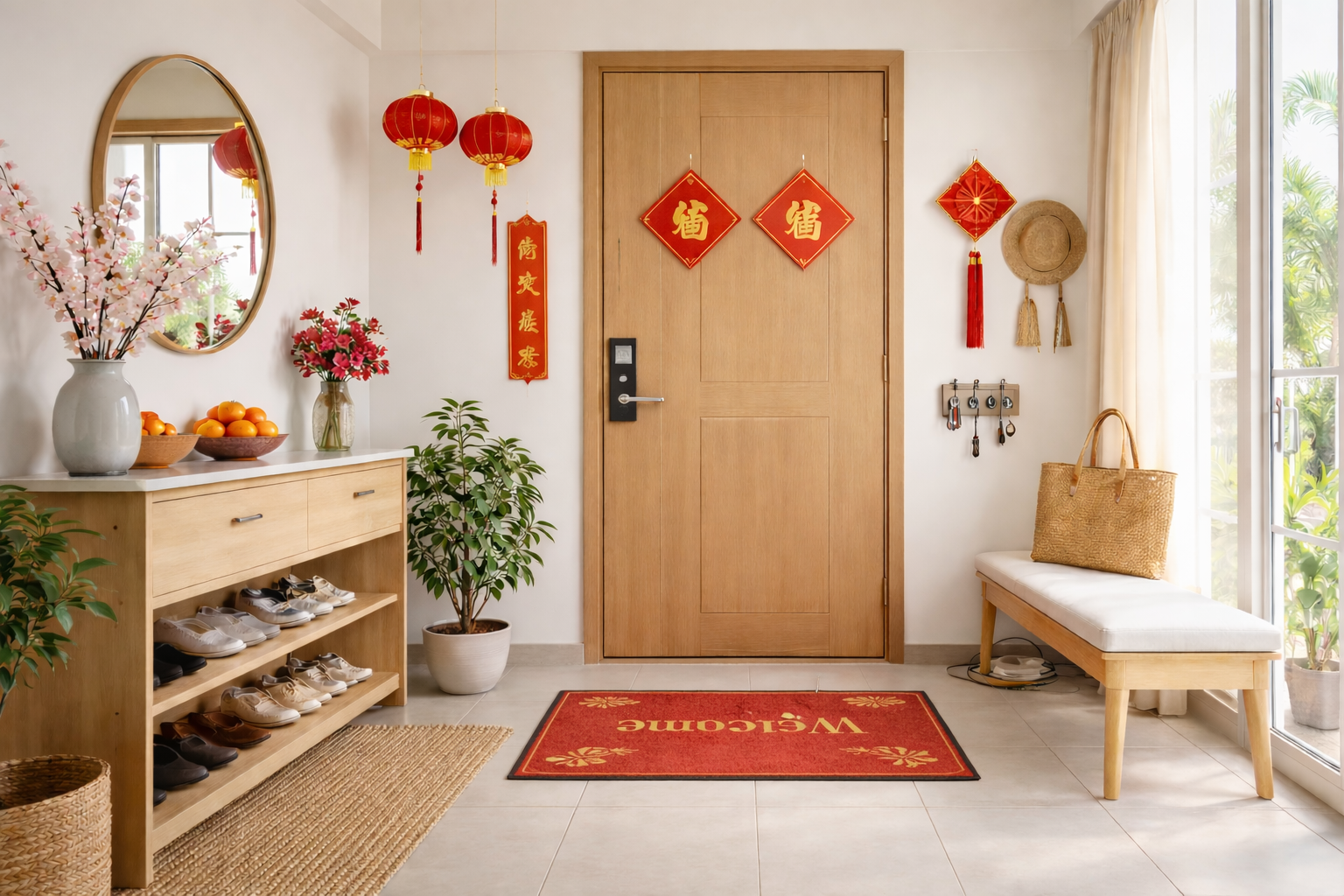
Feng shui experts generally recommend warm, welcoming colours at the entrance, such as soft red accents, earthy browns, beige, or warm neutrals. Use colour in small touches rather than large surfaces to avoid visual overload.
Mirrors work best on a side wall to reflect light and improve visibility. Avoid placing a mirror directly opposite the front door, as it can reflect energy straight back out. Choose healthy, low-maintenance plants and keep them dust-free so they add freshness without blocking movement.
Front Door and Welcome Mat Essentials
The front door is the main point of entry for energy and people into the home, so it should feel solid, clean, and reliable. It must open smoothly, close securely, and be well-maintained, especially during the Chinese New Year.
Feng shui experts generally favour solid wood doors because they symbolise stability and protection. Materials such as teak, oak, or solid-core engineered wood are preferred. Avoid cracked panels, peeling paint, or loose hardware, as these disrupt flow and signal neglect.
A welcome mat plays an important role in feng shui as the transition between the outdoors and indoors. It symbolically filters incoming energy while physically trapping dirt and moisture.
A flat, clean mat helps slow and calm what enters the home, while a worn or dirty mat allows both mess and stagnant energy to spread inside. Choose durable materials like coir or rubber and clean them regularly.
Entryway Safety and Home Security Basics
Entryway safety matters because this space handles constant movement, distracted moments, and repeated door use, especially during the Chinese New Year visiting season. A safe entrance reduces accidents, protects guests, and helps everyone move in and out comfortably.
Start by ensuring clear visibility and movement:
- Keep sightlines clear when the door opens so you can see the floor immediately.
- Remove clutter that could block walkways or emergency exit paths.
- Avoid placing shoes, bags, or décor near door swings or hinges.
Lighting plays a major role in safety:
- Ensure the entrance is well-lit for evening and night entry.
- Add lighting near switches, locks, and shoe areas.
- Eliminate dark corners that could hide steps or uneven flooring.
Pay close attention to door hardware and security:
- Check that locks engage smoothly without sticking.
- Tighten loose hinges and handles.
- Ensure digital keypads respond quickly and consistently.
- Test door closers so doors do not slam or drift open
Hygiene also affects safety and comfort:
- Clean high-touch surfaces like handles, locks, switches, and keypads regularly
- Disinfect areas frequently used by guests.
Special Considerations for Stairs Near the Entrance
Stairs near the entryway require extra care because they combine high foot traffic with higher safety risks. During Chinese New Year, guests may be distracted, carrying items, or unfamiliar with your home layout, which makes clear, well-maintained stairs especially important.
Keep steps and landings free from shoes, bags, décor, or storage at all times. Stair edges should be clean, dry, and clearly visible, with no dust or moisture that could cause slipping. Good lighting along the entire stair run, especially at the top and bottom, is essential to reduce shadows and improve visibility.
From a feng shui perspective, clutter on stairs near the entrance disrupts flow and creates tension. From a practical perspective, it increases the risk of accidents. Clean, clear, and well-lit stairs support safer movement and a calmer, more welcoming entrance for everyone.
5 Common Mistakes That Undo Your Entryway Reset
Small habits can quickly undo even a well-prepared entryway. These five mistakes are the most common, along with simple ways to fix them.
- Keeping too many shoes at the entrance: Set a fixed shoe limit based on household size. Move extra pairs into a bedroom or storage cabinet and rotate weekly.
- Decorating before cleaning and repairs: Do one full clean and repair check before adding décor. If something rattles, sticks, or flickers, fix it first.
- Leaving wet mats or shoes overnight: Hang shoes to dry or place them in an area with airflow. Rotate mats and wash them regularly during rainy periods.
- Ignoring airflow and humidity: Open the door briefly each day to air the space. Clean vents monthly and use a small dehumidifier if needed.
- Delaying small repairs: Create a short repair list and handle issues immediately. Tighten loose screws, replace bulbs, and level mats on the spot.
FAQs
How often should the entryway be cleaned during CNY?
Clean the entryway lightly every day and deep-clean weekly during the Chinese New Year to manage heavy foot traffic, hygiene, moisture, and clutter from frequent visits.
Is it okay to store parcels or deliveries in the entryway during CNY?
Yes, temporarily. Keep parcels contained and clear of walkways, and clear them promptly to maintain safe movement and avoid clutter build-up.
Is it bad feng shui to store umbrellas near the door?
Yes, if they are wet. Store umbrellas near the door only when fully dry and properly contained to avoid dampness and stagnant energy.
Can festive décor stay up after Chinese New Year?
Yes, briefly. Remove décor once visits slow to prevent dust build-up and keep the entryway functional for everyday use.
Conclusion
A well-prepared entrance shapes how your home feels all season. When flow, cleanliness, and function come together, daily movement becomes easier, and visits feel more comfortable.
CNY entryway feng shui works best when it stays practical. Cleaning, repairs, lighting, and organisation create real improvements that decoration alone cannot replace.
By resetting the entryway first, you reduce clutter, improve safety, and create a calmer start to the new year. Small changes here create lasting impact across the home.
If you want to avoid the hassle of deep cleaning and preparation, contact Total Cleanz today to get your entryway ready for the Chinese New Year.