
Shoes pile up by the door, the dining table fills with paperwork, and one chair becomes a clothes drop. For many couples and families, home shifts from calm to quiet tension. Decluttering for love and relationship luck starts with noticing how everyday mess affects connection.
In Feng Shui, clutter represents stagnant energy that interrupts emotional flow. When spaces feel crowded or chaotic, relationships often absorb that stress through irritation, distance, or constant low-level conflict.
Clearing clutter is not about perfection or aesthetics. It’s about restoring ease, balance, and a sense of being supported at home.
This guide shows how to declutter key spaces to create room for closeness, communication, and relationship growth.
What Decluttering for Love and Relationship Luck Means in Feng Shui
Decluttering for love and relationship luck means shaping your home so it genuinely supports two people, not just one person’s habits or history.
In Feng Shui, clutter is seen as blocked energy that affects how a space feels and functions. When energy cannot move freely, emotional connection often feels restricted too. This is why cluttered homes frequently feel tense, draining, or unsupportive, even when relationships themselves are strong.
Feng Shui practitioner Rodika Tchi describes this as a “love checkup” for the bedroom. She encourages people to look honestly at whether the space is comfortable and welcoming for a partner. A squeezed bed, a single bedside table, or an overfilled wardrobe can subtly signal imbalance or a lack of room for another person.
From this perspective, decluttering is not symbolic. It is practical. Clearing space removes physical and emotional barriers, helping relationships feel more balanced, calm, and supported in everyday life.
What to Remove First: Clutter That Blocks Relationship Growth
To declutter for love and relationship luck, remove items that keep your space emotionally stuck, such as belongings from past relationships or unused clutter.
With that said, here are the key things you should remove first:
1. Items From Past Relationships
Items from past relationships can quietly hold emotional weight, even when you believe you have moved on. Photographs, gifts, letters, jewellery, clothing, or furniture bought or shared with a former partner often carry memories that resurface in subtle ways.
In Feng Shui, these objects anchor energy to the past, making it harder for a space to feel open and emotionally available. Removing them does not erase your history. It allows your home to reflect your present life and support healthier, more grounded relationships.
2. Broken, Unused, or Duplicate Items
Broken and unused items often linger because they feel harmless. A cracked mug, spare cables, extra cushions, or clothes never worn still take up mental space. Over time, these objects create visual noise and quiet irritation, especially in shared areas.
Feng Shui views this as energy that cannot fully support daily life. Letting go of what no longer works helps a home feel cared for, intentional, and easier to live in together.
3. Mystery Boxes and Unfinished Projects
A box you never open, or a project you keep meaning to finish, carries quiet pressure. It sits there as a reminder of time, money, or effort already spent. For couples, these half-decisions can become sources of low-level stress or tension.
Feng Shui treats this kind of clutter as energy that is paused rather than flowing. Completing, donating, or discarding these items helps a home feel resolved, lighter, and more forward-moving for both people.
Bedroom Decluttering for Intimacy, Rest, and Emotional Safety

The bedroom should feel calm and supportive, not like a storage space. When clutter builds up, rest and closeness are often the first things to suffer.
Here’s a step-by-step approach to decluttering your bedroom to restore calm, safety, and connection.
Step 1: Clear Under-Bed and Bedside Clutter First
Under the bed often holds shoes, old suitcases, storage boxes, or spare linens. Bedside tables collect books you never finish, tangled chargers, receipts, and half-used products.
This clutter crowds the area closest to rest. Clearing these items and keeping only essentials, like a lamp and one book, helps the bed feel lighter and more supportive of sleep and closeness.
Practical tip: Set a rule that nothing goes under the bed except one labelled box for spare bedding, and clear bedside tables during the weekly laundry reset.
Step 2: Balance Both Sides of the Bed
Look at whether both sides of the bed are equally usable. One side may have a nightstand, lamp, and clear floor space, while the other is blocked by laundry baskets, stacked books, or pushed against a wall.
Move furniture to allow access on both sides, add a second bedside table or lamp, and clear floor clutter so both people can get in and out of the bed with ease.
Practical tip: If space is tight, use wall-mounted lights or slim bedside shelves so both partners have equal access without adding bulk.
Step 3: Remove Work and Distractions From the Bedroom
Bedrooms often double as offices or storage without noticing. Laptops on the bed, paperwork on nightstands, exercise equipment, or charging stations for multiple devices keep the mind alert.
Move work items, files, and excess electronics out of the room. Keep only what supports rest, such as a clock or lamp, so the bedroom remains focused on sleep and connection rather than productivity.
Practical tip: Create a shared family drop zone outside the bedroom for bags, devices, and paperwork to prevent items from migrating back into the bedroom.
Step 4: Reset Wardrobes and “Clothes Chairs”
Wardrobes that are overfilled and chairs covered in worn-out clothes create visual noise and daily frustration. Clothes that no longer fit, belong to past life stages, or are rarely worn, take up space that could support shared routines.
Clearing these items and fully emptying “clothes chairs” helps the bedroom feel organised and breathable.
Practical tip: For families, choose one laundry day each week to reset wardrobes and clear chairs together, returning only clean, wearable clothes to their proper place.
Step 5: Simplify Surfaces and Soften the Room
Busy surfaces can make a bedroom feel restless. Overcrowded dressers, shelves filled with décor, or piles of personal items keep the space visually active.
Remove anything that does not support rest or connection. Leave clear surfaces with only a few meaningful or calming items. This helps the room feel quieter, more settled, and easier to unwind in together.
Practical tip: Aim to keep at least half of each visible surface clear, especially dressers and shelves near the bed.
Living Room Decluttering for Harmony and Better Communication
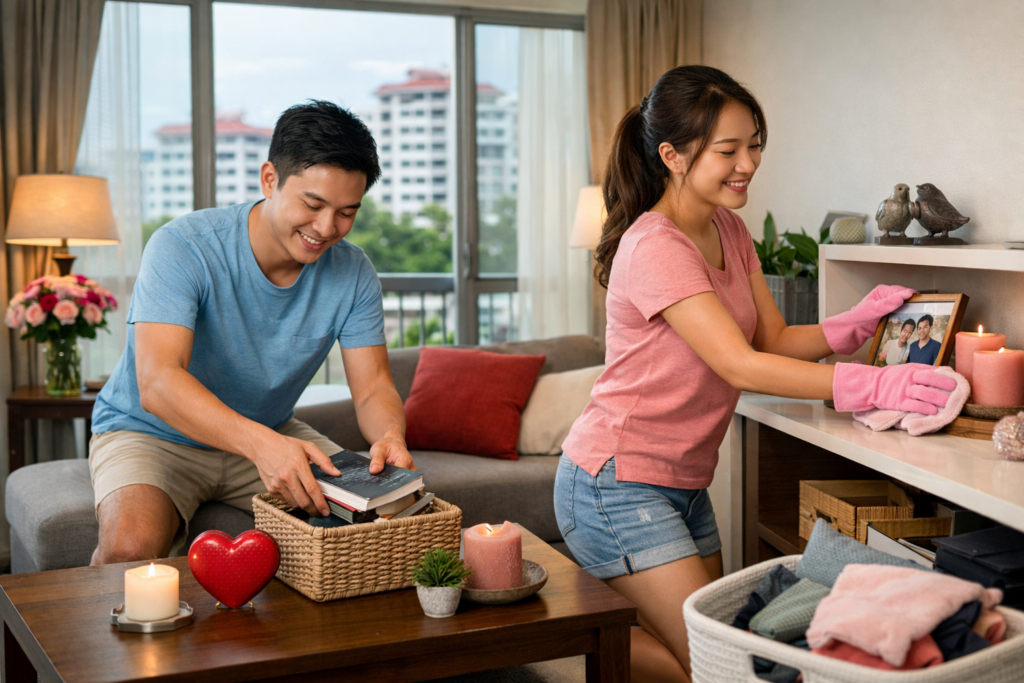
The living room is where daily connection happens. When clutter builds up, conversations can feel distracted or tense.
Here’s a step-by-step way to declutter your living room to support calmer communication and shared time.
Clear Coffee Tables and Flat Surfaces
Coffee tables and flat surfaces quickly become drop zones for daily life. Remote controls, unopened mail, toys, cups, and books pile up, creating visual noise. This clutter can make it harder to relax or focus during conversations.
Clearing these surfaces and keeping only a few shared-use items helps the living room feel calmer, more open, and easier for families to spend time together.
Reduce Cable and Electronics Clutter
Cables, chargers, game controllers, and unused electronics often spread across the living room. Tangled wires behind the television, devices left charging on tables, and multiple remotes can make the space feel busy and distracting.
Gathering cables into organisers, storing unused devices out of sight, and limiting visible electronics helps reduce overstimulation and supports more focused, face-to-face interaction.
Adjust Seating for Face-to-Face Interaction
Arrange sofas and chairs to face each other or form an L-shape instead of lining them against walls or screens. Avoid sitting with your back to doorways, as Feng Shui associates this with discomfort.
Placing the main seating where the room entrance is visible supports ease and attention. Remove extra chairs to keep pathways clear and encourage relaxed conversation.
7 Common Feng Shui Decluttering Myths That Don’t Improve Relationships
- Myth one: You need to buy “love cures” or symbolic ornaments to fix relationship luck. In practice, real Feng Shui prioritises function, flow, and removing clutter over buying objects.
- Myth two: Feng Shui only works if your home looks “Chinese”. Style is optional, but clutter-free, supportive spaces matter in any aesthetic.
- Myth three: It’s a superstition, so it cannot affect how couples feel at home. Many experts frame Feng Shui as practical environmental support, including the impact of clutter on how a space feels.
- Myth four: One-size-fits-all advice, like “fix the love corner,” will solve relationship problems. Quality Feng Shui is tailored to the home and the people living in it.
- Myth five: Furniture placement matters, but decluttering is optional. Several experts emphasise decluttering as a key foundation alongside layout and placement.
- Myth six: You can hide clutter in drawers or under the bed, and it still “counts” as cleared. Some practitioners argue hidden clutter still creates a lingering burden, even if it looks tidy.
- Myth seven: A good practitioner will scare you or insist you must buy expensive items to “save” your relationship. Reputable guidance avoids fear tactics and focuses on practical, often free changes, such as clearing clutter and improving flow.
FAQs
How do you declutter for love?
Remove items from past relationships, broken belongings, and unused clutter, focusing on bedrooms and shared spaces that affect daily connection.
How do you attract love in Feng Shui?
Create balanced, clutter-free spaces, especially the bedroom, with room for two people and a calm, welcoming atmosphere.
Is Feng Shui decluttering about belief or behaviour?
It focuses on behaviour, as decluttering improves how spaces function, feel, and support mood, routines, and communication.
Do I need to declutter the whole house at once?
No, begin with one room or problem area and build consistency gradually to avoid overwhelm and maintain lasting change.
Conclusion
Homes shape how relationships feel day to day. When clutter builds up, tension often follows quietly.
Decluttering for love and relationship luck works because it removes friction from shared spaces. Clear rooms support calmer routines, better rest, and easier communication.
You do not need perfection or belief to see change. Small, consistent shifts in key areas can create noticeable emotional relief at home.
If you want to maximise your love and relationship potential with deeper, stress-free support in Singapore, consider Total Cleanz for professional decluttering and deep cleaning that helps your home truly reset.