
Clutter rarely arrives all at once. It creeps in through unopened mail, crowded countertops, and drawers you avoid opening. Feng Shui decluttering helps you notice that quiet build-up before it drains your energy.
At its core, feng shui decluttering is about clearing physical clutter to improve energy flow and restore balance at home. It prioritises what supports daily life rather than rigid rules or superstition.
For homeowners in Singapore, this means working realistically with limited space, busy schedules, and shared living areas. Small, intentional changes matter more than dramatic clear-outs.
In this article, we will explain the principles behind feng shui decluttering, walk through practical methods, and explore priorities you can apply immediately.
What Feng Shui Means for Decluttering
Feng Shui views clutter as stagnant energy that disrupts balance within a home and blocks the flow of qi (energy). In feng shui philosophy, a cluttered space is often compared to a slow, muddy river where energy cannot circulate freely. This obstruction doesn’t just make a room look messy; it prevents the life force from moving through your home in ways that support wellbeing and comfort.
According to feng shui consultants, clearing clutter is foundational to creating positive, balanced energy flow. Jacky Chou, a feng shui expert and founder of Laurel & Wolf, emphasises that “decluttering is super important in feng shui because it helps create a positive and balanced energy flow in your home.”
This perspective aligns with the idea that physical clutter often mirrors emotional and mental clutter. Many feng shui practitioners note that items you don’t use or need hold old intentions and energies, and letting go of them invites new opportunities and clarity.
Feng shui isn’t about forcing minimalism or strict rituals. Rather, it’s about intentional space-making, keeping what genuinely supports your life and clearing what holds you back.
This grounded approach helps homeowners create a home environment that feels lighter, more energised, and in harmony with daily living.
7 Things to Declutter According to Feng Shui Principles
From a feng shui perspective, clutter includes any item that is unused, broken, outdated, or emotionally draining, as these objects block energy flow and create stagnation within the home.
With that said, here are seven of the most common things feng shui practitioners recommend decluttering first to restore balance and ease.
1. Items Unused for 12 Months or More
Items unused for twelve months often include spare kitchen gadgets, old electronics, unused décor, forgotten hobby supplies, and rarely worn shoes or bags. In feng shui, these objects trap stagnant energy linked to past habits.
If an item has stayed untouched through changing seasons and routines, it no longer supports daily life. Releasing it helps refresh energy and create space for what you actually use.
2. Broken, Damaged, or “Fix Later” Items
Broken furniture, chipped crockery, faulty appliances, torn curtains, and items kept aside for future repair create stagnant energy in feng shui. These objects symbolise delay and unfinished intention. Seeing them repeatedly reinforces inaction, even subconsciously.
If something has been waiting to be fixed for months, it’s usually better to repair it immediately or remove it completely to restore flow and clarity.
3. Expired, Unsafe, or Outdated Items
Expired food, old medicines, unused cosmetics, and outdated cleaning products weaken both hygiene and energy in the home. In feng shui, keeping items past their safe-use date symbolises neglect and stagnation.
These items often collect unnoticed in kitchens and bathrooms. Clearing them regularly supports freshness, safety, and smoother energy flow in spaces used every day.
4. Excess Duplicate Items Without a Clear Purpose
Excess duplicates, such as multiple water bottles, extra bedsheets, repeated kitchen tools, or unopened household supplies, can overcrowd storage areas. In feng shui, abundance should feel supportive, not overwhelming.
When duplicates exceed practical need, they restrict movement and attention. Keeping only what you realistically use helps energy circulate freely and makes daily routines simpler and more efficient.
5. Clothing That No Longer Fits or Feels Right
Clothing that is too tight, worn out, or no longer suits your lifestyle holds outdated personal energy. This includes unworn workwear, event outfits, or items kept “just in case.”
In feng shui, these pieces affect confidence and self-image. Letting them go makes space for clothing that supports how you live now and how you want to feel each day.
6. Old Paperwork, Manuals, and Unused Documents
Old bills, instruction manuals, warranty papers, and outdated documents often pile up unnoticed. In feng shui, paper clutter traps mental energy and creates a sense of unfinished responsibility. These items commonly fill drawers and cabinets, especially in home offices.
Digitising what you need and recycling the rest helps restore clarity, focus, and lighter energy throughout the home.
7. Hidden Clutter in Storerooms, Cabinets, and Drawers
Hidden clutter includes overcrowded storerooms, packed kitchen cabinets, jammed wardrobes, and messy drawers. In feng shui, unseen clutter still blocks energy and often creates subtle stress.
These areas are easy to ignore, especially in compact homes, but they strongly affect overall flow. Clearing them improves functionality and prevents stagnation from quietly building over time.
The Feng Shui Decluttering Method (Step by Step)
In feng shui, decluttering is most effective when done in a clear, intentional order that restores energy flow quickly.
With that in mind, here’s a simple step-by-step approach you can follow to declutter your home with more ease and confidence.
Step 1: Clear Surfaces and Open Walkways First
Start with entryways, corridors, and visible surfaces like kitchen counters, tables, and shelves. Remove items that don’t belong and place them in a temporary box. In feng shui, these areas act as energy pathways, so clearing them first improves flow, creates instant calm, and builds momentum.
Step 2: Declutter by Category, Not by Room
Group similar items together, such as clothing, books, papers, or kitchen tools, and declutter them at once. Seeing everything in one place makes decision-making easier and prevents duplicates from slipping through. Finish one category before moving on to avoid overwhelm.
Step 3: Decide Quickly: Keep, Donate, Recycle, or Dispose
Handle each item once and decide promptly whether to keep, donate, recycle, or discard it. Use clearly labelled bags or boxes and avoid setting items aside “for later.” Quick decisions keep energy moving and reduce emotional attachment.
Step 4: Assign a Home to Every Item
Give each remaining item a clear, permanent place based on how often you use it. Keep everyday items within reach and store occasional items elsewhere. Items without a home create visual noise and make clutter return faster.
Step 5: Remove Items Fully Before Cleaning
Take out donations, rubbish, and recycling before cleaning. Once the space is empty, clean surfaces and floors thoroughly and air the room if possible. Removing items completely helps reset the space and seals the decluttering process.
Using the Bagua Map Without Overthinking It
The Bagua map links areas of the home to different aspects of life. In feng shui, clutter in each zone affects that life area because objects carry intention, memory, and use. Clearing specific items helps restore balance where energy feels stuck.
- North (Career and Life Path): Old work files, unused electronics, and tangled cables represent outdated direction and stalled momentum. Clearing them supports clarity, focus, and forward movement in work and purpose.
- Northeast (Knowledge and Personal Growth): Outdated books, old notes, and abandoned learning materials reflect past goals. Removing them helps sharpen focus and supports current growth and decision-making.
- East (Family and Health): Broken décor, unused furniture, and expired health items disrupt harmony and vitality. Clearing these supports smoother family routines and physical wellbeing.
- Southeast (Wealth and Abundance): Broken appliances, old bills, unused wallets, and neglected valuables symbolise blocked resources. Removing them encourages healthier financial flow and a sense of abundance.
- South (Reputation and Visibility): Visual clutter, dusty displays, and tangled wires dull presence and confidence. Clearing this area supports recognition, clarity, and the home’s presentation.
- Southwest (Relationships and Stability): Emotionally charged items and reminders of past relationships anchor old energy. Letting them go creates space for stability, connection, and supportive partnerships.
- West (Creativity and Joy): Unused art supplies, old toys, and abandoned hobbies reflect a stalled creative spirit. Decluttering here helps reawaken playfulness, expression, and enjoyment.
- Northwest (Helpful People and Leadership): Overcrowded storage, unused tools, and neglected travel items block support and guidance. Clearing them symbolises openness to help, mentors, and collaboration.
- Centre (Overall Balance and Wellbeing): General clutter, bulky furniture, and blocked walkways disrupt the home’s core energy. Keeping this area open supports balance, stability, and ease throughout the space.
What to Do With Items You Remove

Once items are decluttered, it’s important to move them out of the home promptly. In feng shui, holding onto bags of unwanted items keeps old energy lingering, even if they’re no longer in use.
Sort items into clear categories: donate, recycle, sell, or dispose. Donate usable items to charities or community organisations, recycle where possible, and discard broken or unsafe items responsibly.
After Decluttering: Deep Cleaning and Sanitisation
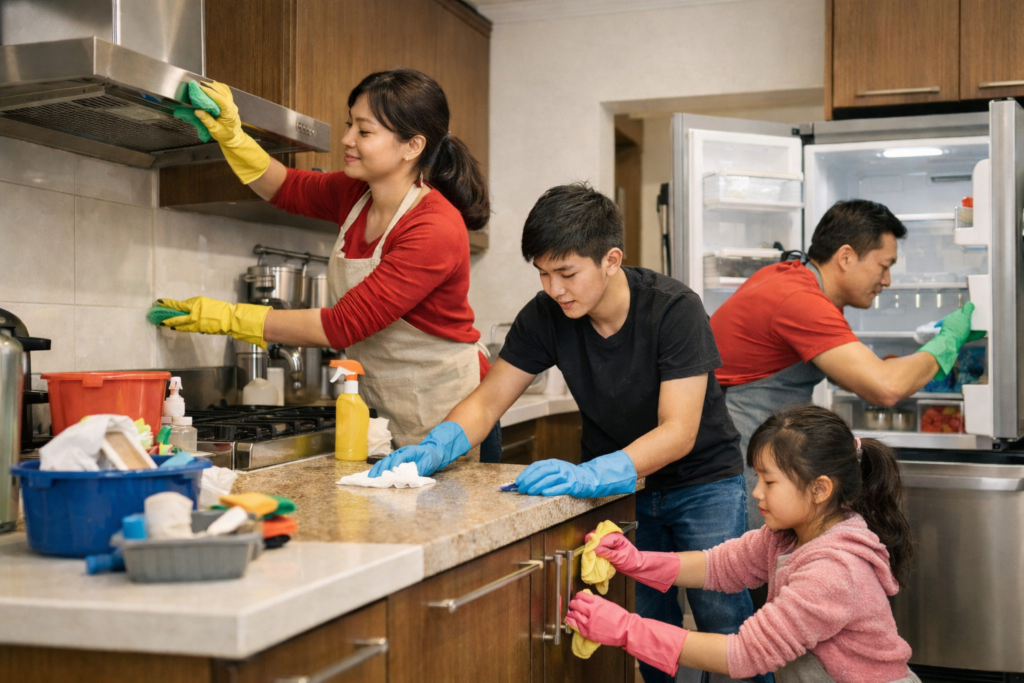
After decluttering, deep cleaning helps reset the space and reinforce the energetic shift. Removing dust, grime, and residue clears what’s left behind after items are gone.
Sanitise and disinfect by wiping surfaces, vacuuming floors, and cleaning storage areas before putting items back. Pay extra attention to corners, drains, and damp areas.
Open windows where possible to refresh the air. In feng shui, cleaning after decluttering helps seal the change, leaving the home feeling lighter, calmer, and more balanced.
FAQs
What is the 10 10 10 rule for decluttering?
The 10 10 10 rule means decluttering 10 items in 10 minutes across 10 small areas to build momentum without overthinking or fatigue.
What is the 12-12-12 rule for decluttering?
The 12-12-12 rule involves choosing 12 items to discard, 12 to donate, and 12 to return to their proper places.
What is the 1/3/5 decluttering rule?
The 1/3/5 rule focuses on one large decluttering task, three medium tasks, and five small tasks per session.
What are the 4 C’s of decluttering?
The four C’s are collect, categorise, cut, and contain, guiding you to remove clutter first, then organise what truly remains.
Conclusion
Feng Shui decluttering is less about removing everything and more about keeping what genuinely supports daily living. A clear home encourages calm, focus, and smoother energy flow.
By letting go of unused, broken, or emotionally heavy items, your space becomes easier to move through and easier to maintain. Small shifts often bring noticeable relief.
Consistency matters more than intensity. Simple check-ins help prevent clutter from rebuilding and keep your home feeling balanced over time.
If you want to maximise these benefits without the hassle, consider Total Cleanz. With over twenty years of experience, we help homeowners clear, clean, and reset their spaces with care and professionalism.