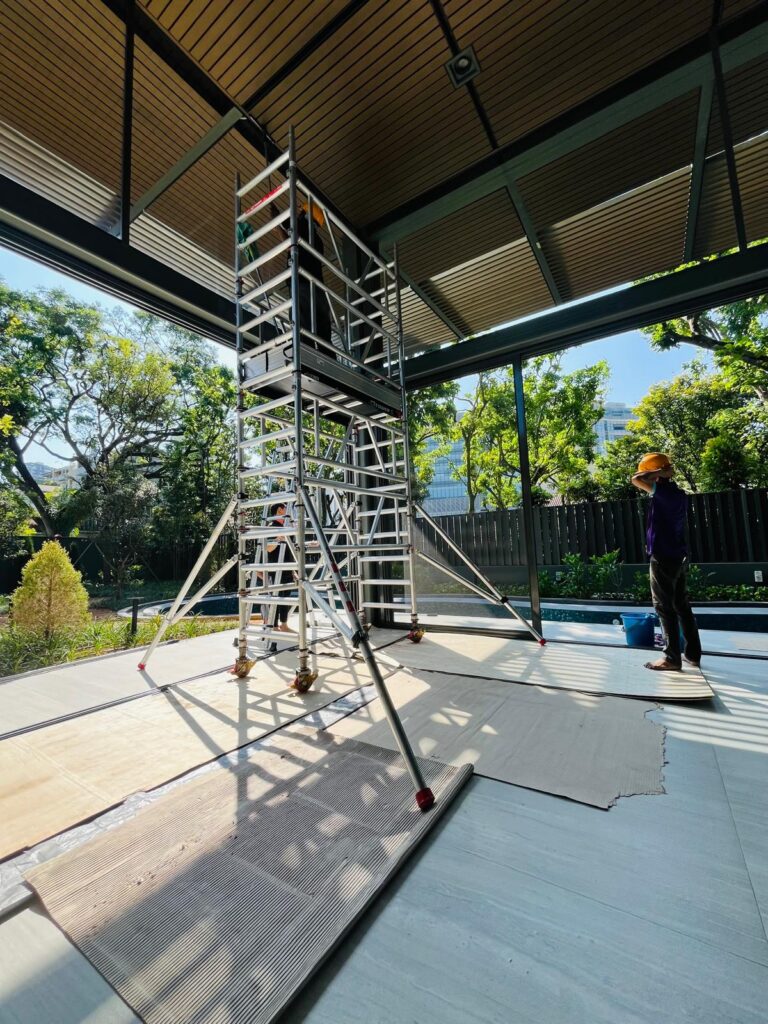
When dirt collects on high glass, ceiling edges, exterior ledges, or wide walls, scaffolding becomes important for cleaning that cannot be done properly without stable access and close control.
Scaffolding is usually needed when cleaners must work at height, move across large surfaces, use tools safely, or reach awkward areas that ladders, poles, or lifts may not handle well for the full cleaning scope.
In this article, we’ll look at when scaffolding makes sense, how it compares with other access methods, and what safety factors professionals check before cleaning starts.
Let’s look at what really decides the safest way up.
What Is Scaffolding In Professional Cleaning?
Scaffolding in professional cleaning gives workers a raised, steady platform when the job cannot be done properly from floor level. It is usually considered for surfaces that sit too high, stretch too far across, or require more control than a ladder or long pole can safely provide.
You may see this in atriums, high walls, exterior ledges, glass panels, beams, signage, and ceiling corners where dust, stains, or residue tend to build up quietly. Getting close to the surface matters because some marks need scrubbing, rinsing, wiping, or careful chemical application, not just a quick pass from a distance.
Scaffolding also becomes useful when the task takes time. If workers need both hands, repeated movement, cleaning tools, or solutions while working at height, a proper platform helps them clean with a steadier footing and less awkward stretching.
When Scaffolding Is Usually Needed For Cleaning
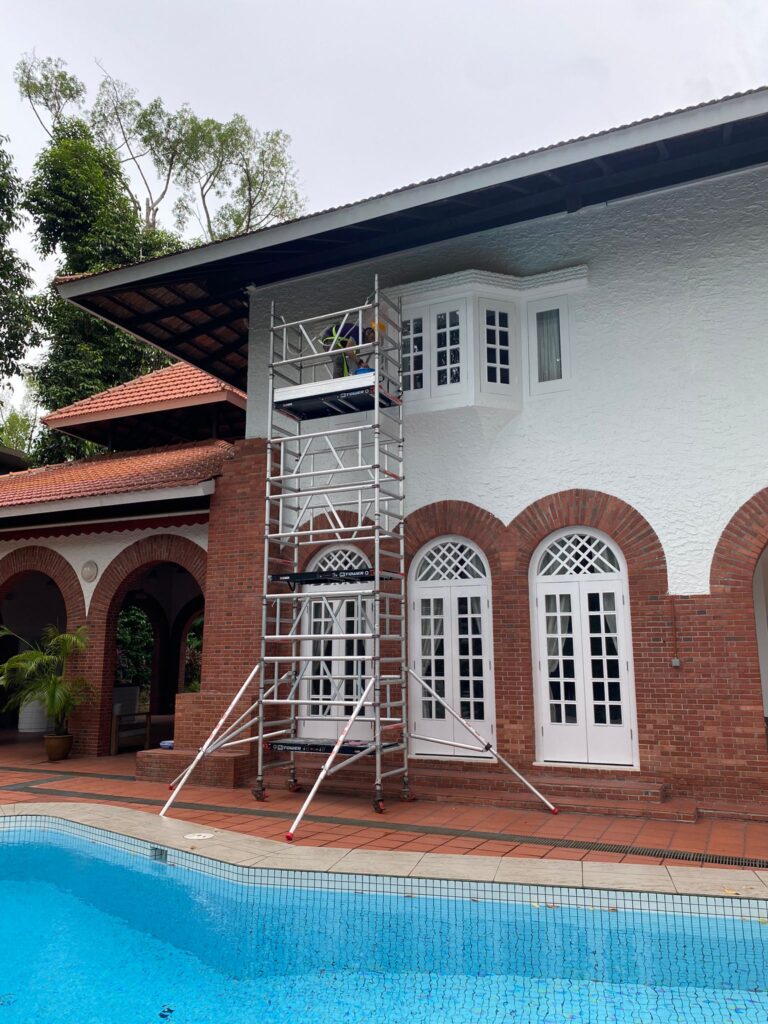
Sometimes, the dirt is not the hardest part; the building layout is. When a surface sits too high, stretches too wide, or falls into an awkward corner, the wrong access method can make proper cleaning harder than it should be.
Here is a look at when it’s time to bring in the platforms:
Situation 1: High-Rise Exterior Cleaning
For high-rise walls and glass panels, a quick spray from the ground won’t cut it. You need a setup where the cleaner can actually get within arm’s reach of the surface.
Scaffolding is the go-to when a building’s layout allows for a fixed structure, giving the crew a chance to scrub, rinse, and inspect every inch without having to overstretch or gamble with their balance.
Situation 2: Large Surface Area Cleaning
Large walls or sprawling ceilings turn simple tools into a massive time sink. If you use a ladder, the worker has to climb down, move the gear three feet, and climb back up over and over again. A scaffold gives the team a wide, continuous workspace.
They can move sideways easily, carrying all their tools and solutions with them, which leads to a much more consistent finish across the whole area.
Situation 3: Cleaning That Requires A Stable Working Platform
Some marks need more than a light wipe; they need firm pressure, steady handling, or specialised cleaning equipment. It’s nearly impossible and very unsafe to use a pressure washer or a heavy-duty scrubber while balancing on a rung.
A stable platform lets the cleaner plant their feet, use both hands, and apply the right amount of pressure to lift stubborn stains without worrying about the equipment kicking back.
Situation 4: Hard-To-Reach Building Areas
Every building has them: recessed ledges, skylights tucked behind beams, or decorative canopies that a straight ladder can’t lean against.
If we can’t get close enough to see the dust, we can’t clean it properly. Scaffolding lets us build a path right to those hidden spots, ensuring that atriums and high clearance voids actually get the deep clean they need.
Situation 5: Long-Duration Cleaning Projects
If a job is going to take hours or days, fatigue becomes a real safety risk. Standing on a narrow ladder for a full shift is a recipe for a lapse in concentration.
Scaffolding provides a proper floor where the crew can work in stages, keep their supplies organized, and maintain their focus. It’s about making sure the quality at 4:00 PM is just as good as it was at 8:00 AM.
Why Ladders Are Not Always Suitable For Professional Cleaning
Ladders have their place in cleaning, especially for short tasks where the surface is easy to reach and the work does not take long. They become less suitable when the cleaner has to stretch sideways, carry tools, apply cleaning solutions, or stay in the same raised position for too long.
A ladder gives height, but it does not give much working space. That matters when the job involves scrubbing a wide wall, wiping glass panels, removing dust from beams, or treating stains that need steady hand movement.
In professional cleaning, the safest access method is not always the one that reaches the area first. It is the one that lets the worker clean with enough balance, control, and time to complete the task properly.
When cleaners need to move, scrub, rinse, and check the surface properly, scaffolding can offer the kind of working space a ladder cannot provide.
Scaffolding Vs Other Cleaning Access Methods
Not every high area needs scaffolding, and not every cleaning job can be handled well with a ladder, lift, rope system, or long pole, so the right choice usually depends on how close workers need to get, how long the task will take, and how much control the surface needs.
Below are the main cleaning access methods and how they compare with scaffolding:
Scaffolding vs Ladders
A ladder is useful when the job is small enough to finish from one safe position, such as wiping a reachable panel or dusting a small fixture. It starts to feel like the wrong tool when the cleaner has to lean, twist, hold the cleaning solution, or keep climbing down to move a few inches across.
Scaffolding gives the work a proper base when the surface needs more than a quick pass. The cleaner can stand nearer to the area, use both hands properly, and inspect the surface without treating each section like a separate balancing act.
Scaffolding vs Mobile Elevated Work Platforms
Mobile elevated work platforms can be useful when the site has enough floor space for the machine to enter, turn, and sit level without blocking critical access. They often suit spot work, vertical reaches, or areas where the platform needs to rise and lower quickly.
Scaffolding is more suitable when the cleaning area needs a wider working face rather than a moving machine. It can give cleaners a steadier run along walls, ceilings, ledges, or panels where the job involves repeated scrubbing, rinsing, wiping, and checking from close range.
Scaffolding vs Rope Access
Rope access can make sense when the cleaning area sits on a tall, narrow, or awkward exterior face where building a platform would be difficult. It can also reduce ground disruption when there is limited space for scaffold setup around entrances, walkways, or busy frontage areas.
Scaffolding is more suitable when the work needs a fixed base, closer surface control, or repeated movement across the same section. If cleaners need to scrub ledges, manage tools, rinse carefully, or inspect details at arm’s length, a platform may give them a steadier working position.
Scaffolding vs Water-Fed Poles
Water-fed poles work well when the surface can be cleaned from the ground with brush movement and controlled water flow. They are often useful for reachable glass, panels, or exterior sections where the dirt is light and does not need close-hand treatment.
Scaffolding is useful when the cleaner needs to judge the surface up close and apply pressure with better control. That matters around frames, ledges, corners, and marks that a water-fed pole may wet but not fully remove.
Safety Factors That Influence Scaffold Use
Scaffolding is not chosen only because a surface is high; it is chosen after checking whether workers can stand safely, move properly, handle tools, and protect people below.
Here are the safety factors that can turn scaffolding from a possible option into a more sensible access choice:
- Worker Stability and Fall Prevention: Workers need enough room to stand, shift position, and clean without leaning into unsafe angles. Guardrails, secure platforms, safe access points, and edge protection matter when cleaning involves water, tools, and repeated movement.
- Public Safety Around Cleaning Areas: Cleaning over busy ground areas needs tighter control because people may still walk, park, or enter the building below. The area may need barriers, warning signs, and timing that keeps foot traffic away from the active work zone.
- Weather and Surface Conditions: Rain, wind, heat, wet platforms, and poor visibility can affect outdoor scaffold work. A surface that feels safe in dry weather can become risky once water, cleaning solution, or gusts are involved.
- Equipment and Weight Support: Cleaning tools can build up quickly once buckets, hoses, scrapers, vacuums, or chemical containers are brought onto the platform. The setup needs to allow enough space and load support for the team to work without crowding the deck.
- Ground or Floor Stability: The surface below the scaffold matters too. Uneven ground, slopes, drains, fragile flooring, soft soil, or polished surfaces can affect how the scaffold sits and whether protective measures are needed before work begins.
How Professionals Decide Whether Scaffolding Is Necessary
Professionals decide whether scaffolding is necessary by checking whether the cleaning task can be done safely, closely, and properly with another access method, while considering height, movement, tools, water, surface conditions, and people nearby.
Below are the main checks that usually shape the decision:
- Building Height and Layout. A tall wall is only part of the problem, because ledges, recesses, ceiling voids, and angled corners can decide whether cleaners can reach the surface safely and actually see what they are cleaning.
- Access Restrictions. The access route can decide the method before the cleaning even starts. If corridors are tight, entrances are busy, vehicles block the frontage, or planted areas sit where equipment should go, some access choices may no longer work.
- Cleaning Scope and Duration. A short wipe-down may not need scaffolding, but a longer task across wide panels, beams, exterior surfaces, or high-rise glass may. For example, Total Cleanz assesses the cleaning scope, access route, site risks, and required outcome for a high-rise window cleaning before deciding whether scaffolding, specialised equipment, or another access method is more suitable.
- Risk Assessment Considerations. It is usually decided by the access method, not personal preference. Fall risk, falling objects, wet surfaces, cleaning chemicals, weather, electrical points, and public movement all affect whether scaffolding is suitable or whether another access method makes better sense.
Singapore Safety And Compliance Considerations
In Singapore, scaffold-based cleaning needs planning before anyone starts washing, wiping, or moving tools at height. The risk is not only the height itself, but also wet surfaces, nearby pedestrians, equipment, and people working below.
According to Singapore’s Workplace Safety and Health (Scaffolds) Regulations 2011, work platforms where a person may fall more than 2 metres must have toe-boards and two or more guard-rails. This matters during cleaning because workers may be moving with water, tools, and cleaning solutions on the platform.
These are the safety and compliance points that usually need checking before scaffold access is used:
- Scaffold setup should be properly controlled. A scaffold is safest when it is built, adjusted, and taken down by people who know how the structure is meant to hold weight.
- Work-at-height risks should be assessed first. The team should look at fall risks, fragile surfaces, open edges, weather, and activity below before deciding on scaffold access.
- Public areas need extra control. If cleaning takes place beside an entrance, walkway, car park, or occupied building, the area below cannot be treated as empty space. Barriers, visible signs, secured tools, and careful timing help keep people away from active work.
- The scaffold must suit the cleaning task. Dusting a beam is not the same as washing a façade or treating a stubborn stain. The platform setup should match the reach needed, the tools being used, and the time workers will spend there.
- Documentation and supervision matter. On higher-risk sites, the small checks matter before work starts. Inspections, briefings, permits, or site-specific controls help make sure access decisions do not rely on guesswork.
FAQs
Does Scaffolding For Cleaning Require Approval From Building Management?
Yes, especially if the scaffold affects a lobby, driveway, loading bay, walkway, or any space other people still need to use.
Is Scaffolding Needed For Every Window Cleaning Service?
No, some windows can be cleaned without scaffolding when the glass is reachable from the ground, a lift can sit safely nearby, or rope access suits the façade.
Can Scaffolding Damage Floors Or Exterior Surfaces?
At Total Cleanz, this is not something you need to worry about. Our team uses protective measures to safeguard your floors and exterior surfaces.
Can Scaffolding Be Used During Wet Weather?
No, wet weather can make metal platforms slippery, gear tough to grip, and climbing way more dangerous than the cleaning task is worth.
Conclusion
The best cleaning plan starts before any water, cloth, or tool touches the surface, because access can decide how safely the work gets done.
Scaffolding for cleaning becomes useful when height, surface width, task duration, tools, and site risks make ladders, poles, or other methods less practical.
The decision really comes down to the building’s layout, what needs cleaning, current weather, foot traffic flow, and how much surface detail actually matters.
If your site has high glass, ledges, ceilings, or exterior areas that are hard to reach, Total Cleanz can assess the access route, cleaning scope, and site conditions before recommending the most suitable way forward.