Some of the hardest cleaning work happens above eye level, and these high-area case studies reveal why such jobs need more than routine methods.
High-area cleaning covers façades, roof edges, upper glass, canopies, and atriums, where height, access limitations, and safety demands make the work far less straightforward.
In this article, you will see real projects, the site challenges behind them, the access methods used, and what they reveal about choosing well.
Let’s get into it.
What Makes High-Area Cleaning Projects Different
High-area cleaning is different because the cleaning itself is only one part of the job. The bigger issue is access. A wall, roof edge, skylight, or glass panel may look straightforward from the ground, but the real work starts when you need to reach it safely without damaging the surface or disrupting the space below.
That is why these projects usually involve more planning than standard cleaning. You may need to consider working height, access points, anchor positions, ground conditions, nearby pedestrian traffic, weather exposure, and the type of material being cleaned. External glass, painted walls, metal cladding, roof structures, and canopies do not all respond the same way to water pressure, chemicals, or tools.
A high-area job can also become more complex because of the building itself. Some sites have narrow frontage, limited setup space, awkward roof lines, or sections that sit directly above walkways, car parks, or decorative features. In those cases, the method cannot be chosen for speed alone. It has to suit the structure, the risks, and the condition of the surface.
This is also why high-area cleaning often overlaps with access planning, safety control, and site protection. A good result is not just a cleaner surface. It is a job completed with the right setup, the right method, and no unnecessary risk to people, property, or the finish being cleaned.
3 Real High-Area Cleaning Case Studies From Total Cleanz
Now that you know what makes high-area cleaning different and why safety matters just as much as the cleaning itself, choosing a professional service becomes critical. You need a team that can assess access properly, work around real site constraints, and carry out the job without cutting corners.
With that said, here are 3 real projects from Total Cleanz that show what that looks like in practice.
Case Study 1: External Façade and Signage Cleaning
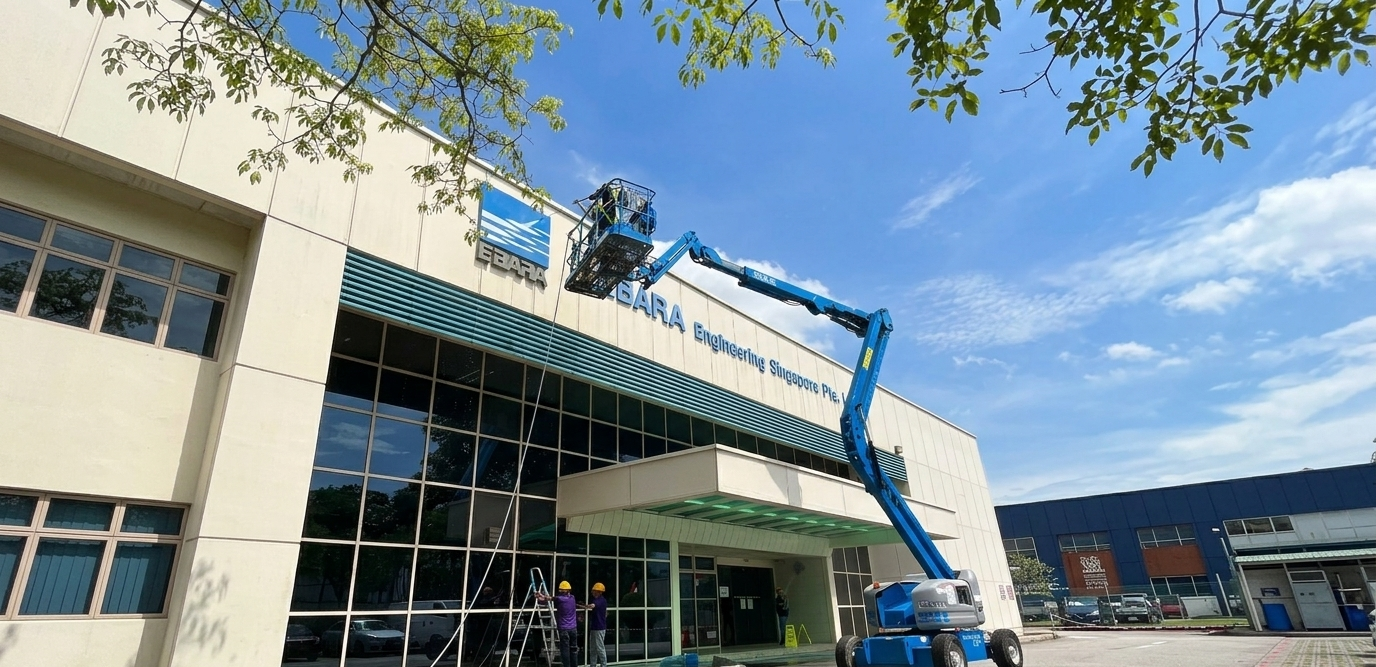
The first case study took place at Ebara Engineering Singapore Pte. Ltd., located at 1 Tuas Link 2, Singapore 638550.
As a company involved in pump-related engineering, sales, and after-sales support in Singapore, it was a good example of a commercial site where pressure washing and boom lift access were needed to clean the upper façade and signage properly.
Situation:
- The project involved cleaning the upper façade, external wall sections, and elevated building signage across a large commercial frontage
- The cleaning area sat well above ground level and stretched across a wide section of the building face
- Standard ladder access would not have been suitable because it would have offered limited reach, less stable working access, and poorer coverage across the wider frontage
- A boom lift was more appropriate because it allowed the team to reach higher and farther sections of the façade and signage with better positioning control
- The site also had an open external frontage, so the access method needed to support safe elevated work while covering more of the building efficiently
Solution:
- Deployed a boom lift to access the upper façade and signage safely and more effectively
- Used appropriate safety harnesses while carrying out elevated cleaning works from the boom lift platform
- Applied pressure washing to clean the external façade and signage surfaces more thoroughly
- Coordinated the work with ground support below while the elevated cleaning was in progress
- Used an access method that matched the height, reach, and frontage width of the site better than basic access equipment
Result:
- Across the wider building frontage, the upper façade and signage could be cleaned more thoroughly
- Boom lift access allowed the team to reach elevated external sections that would have been harder to clean properly with ladder access alone
- This project showed why a boom lift can be the more suitable option for larger high-area cleaning works that need broader reach
- With the right access method and pressure washing approach, the building frontage received a safer and more complete high-level clean
Case Study 2: High Ceiling and Upper Glass Cleaning
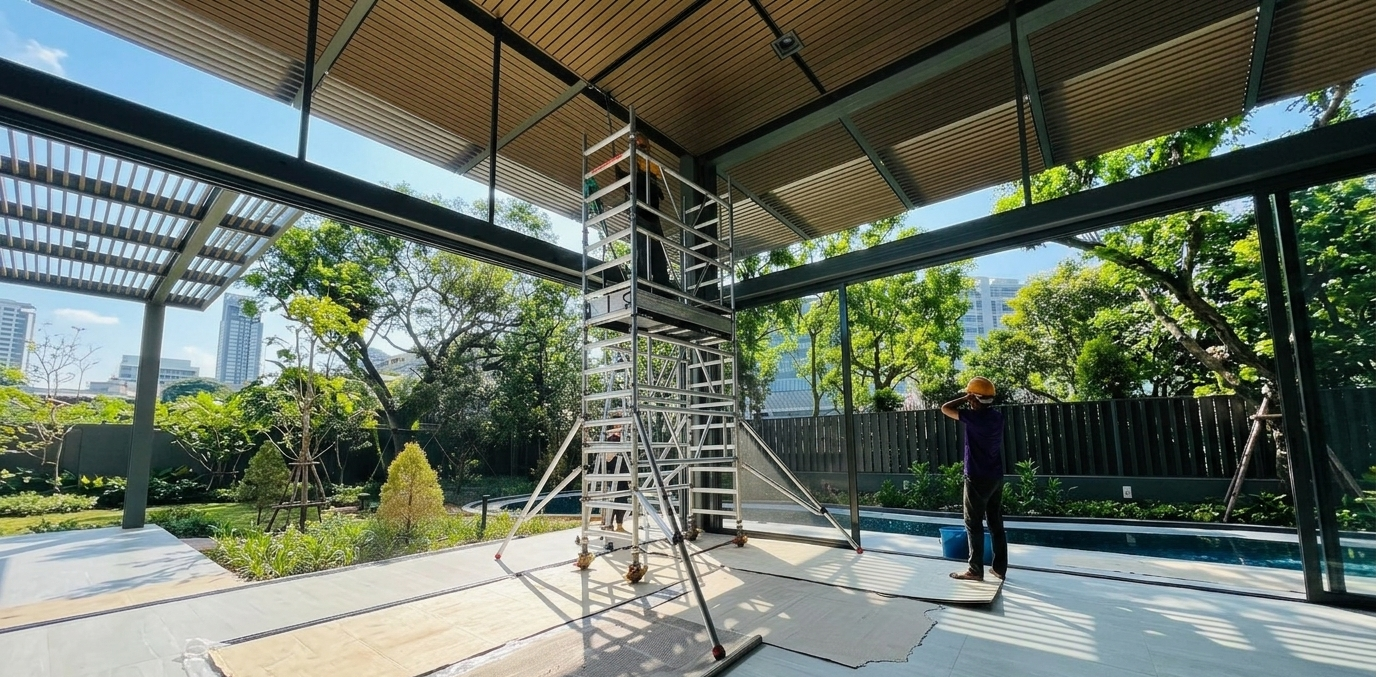
This case study involved a covered residential pavilion with a high ceiling structure, upper glass panels, and exposed steel framing. From the layout and working area, the job needed a stable access setup that could reach overhead sections properly while also protecting the finished flooring below.
Situation:
- The cleaning scope included high ceiling panels, upper glass sections, and structural beams within a covered open-air residential space
- The height of the ceiling made standard hand-cleaning from the ground ineffective and incomplete
- The work area sat above finished flooring, so the access method also needed to minimise unnecessary movement and reduce the risk of surface damage below
- Scaffolding was the better option because it provided a more stable working platform for overhead cleaning across multiple sections of the pavilion
- Compared with basic ladder access, scaffolding gave the team better balance, safer reach, and more controlled positioning while working across the upper structure
Solution:
- Implemented mobile scaffolding to create stable elevated access to the high ceiling and upper glass areas
- Chose scaffolding because it allowed the team to work across the overhead sections with better control than a ladder-based setup
- Laid protective boards and coverings across the floor before starting work
- Carried out the cleaning from the scaffold platform to reach the upper surfaces more thoroughly and safely
- Used a controlled setup that suited both the height of the structure and the need to protect the surrounding area
Result:
- With the right elevated access in place, the high ceiling and upper glass sections could be cleaned more thoroughly
- Scaffolding gave the team a steadier and more controlled platform to work across the overhead structure
- Throughout the job, the flooring and nearby surfaces remained protected
- More importantly, the project showed why scaffolding can be the better fit for covered high-area cleaning where stability and surface protection both matter
Case Study 3: Elevated Signage and Upper Frontage Cleaning
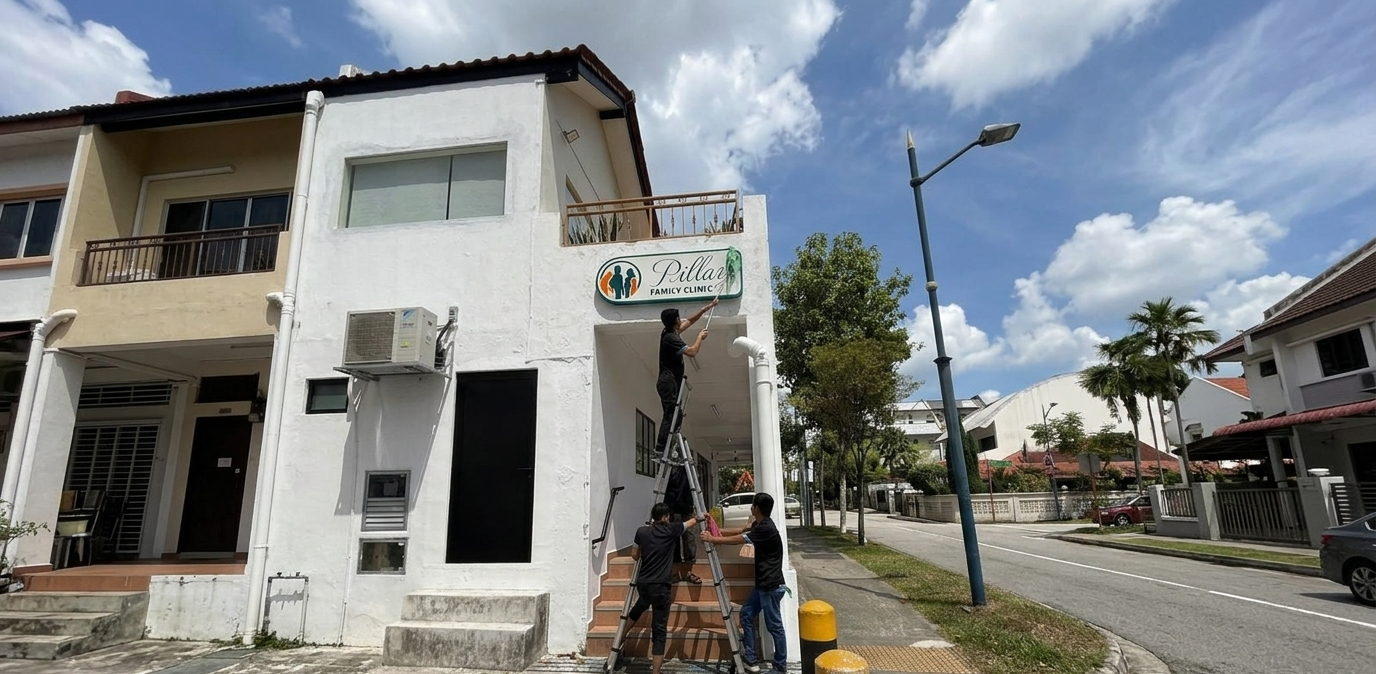
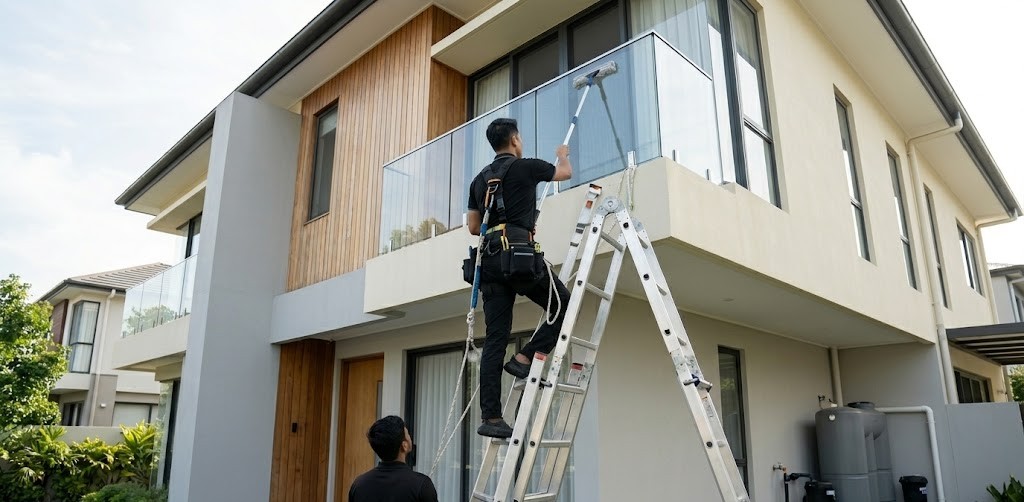
Not every high-area cleaning job needs a large machine or a complex setup. This project focused on the upper signboard and frontage of a two-storey family clinic, where the tighter layout called for a simpler access method that still gave the team enough control to work safely and properly.
Situation:
- Cleaning work centred on the clinic signboard and the upper front section of the unit
- Positioned above the staircase entrance, the sign was harder to reach from ground level
- In front of the unit, a narrow space and nearby public-facing walkway added to the access challenge
- For this site, a boom lift or scaffold would have taken up more room than the layout comfortably allowed
- Ladder access made more sense because it gave direct reach without turning a smaller job into a heavier setup
Solution:
- An extendable ladder was used to reach the signboard and the upper frontage
- To keep the setup stable, 3 team members supported the ladder from below during the work
- That support also helped manage the area around the entrance while cleaning was in progress
- Hand-cleaning was carried out on the upper sections, which gave better control over a smaller frontage
- Overall, the method suited both the working height and the tighter space on site
Result:
- With the right setup, the signboard and upper frontage were cleaned properly
- The team worked within a smaller footprint without needing larger access equipment
- This case showed that even modest high-area cleaning jobs still need proper planning and enough manpower
- More importantly, it showed that the best access method is the one that fits the site, not simply the biggest one
Common Site Challenges and Patterns Across High-Area Cleaning Projects
These three projects were different, but the same site issues came up in each one. The main challenge was not just cleaning at height. It was finding the right way to reach the area safely, work within the site limits, and avoid creating problems below.
That is what made each setup different. The commercial building needed a wider reach across a taller frontage. The covered pavilion needed a stable platform for overhead work above finished flooring. The family clinic needed a simpler setup that could work in a tighter space near a staircase and walkway.
Across all three case studies, the main site challenges were:
- Access was limited in different ways, from a broad external façade to a tight clinic entrance and a covered overhead structure
- Space below the work area affected the setup, especially where there was finished flooring or a public-facing walkway
- Height changed the method, because upper signage, overhead glass, and external façade sections could not be handled the same way
- Stability mattered, whether that meant using scaffolding for steadier overhead work or assigning 3 people to support a ladder
- Surface protection was part of the job, not an afterthought, especially where floors, nearby fixtures, or external finishes could be affected
Why Access Method Selection Matters
Choosing the access method is not a small detail. It affects how safely the team can work, how well the area can be cleaned, and whether the setup actually suits the site.
In these three projects, each method solved a different problem. The boom lift worked better for the large commercial building because the upper façade and signage stretched across a wider frontage and needed more reach. Scaffolding made more sense for the covered pavilion because the team needed a steady platform for overhead glass and ceiling sections above finished flooring. For the family clinic, ladder access was the more practical choice because the job was smaller, the frontage was tighter, and a larger setup would have taken up too much space.
That is why high-area cleaning should not be approached with one fixed method. The right choice depends on the height, layout, work area below, and how much control the team needs during the job.
What These Projects Show About Choosing a Contractor
When you look across these projects, the main takeaway is not only that different sites need different equipment. You can also see that the result depends on how well the job is managed from the start.
A wide commercial frontage, a covered pavilion with finished flooring, and a tighter clinic entrance each call for different decisions, different controls, and different levels of supervision.
This is where Total Cleanz comes in. These case studies reflect a more managed cleaning approach, not just a basic cleaning service. That means you get a site assessment first, the right method for the job, a custom checklist rather than a generic one, a dedicated supervisor, a post-cleaning inspection, and quick rectification if anything still needs attention.
That is what you should look for in a cleaning contractor. You are not simply paying for cleaning. You are paying for fewer complaints, less rework, less hassle, and a result that is managed properly from start to finish.
FAQs
When Is Scaffolding Required For Cleaning?
Scaffolding is required when areas are too high, wide, or unstable for ladders, or when the job needs steady access for safe and thorough cleaning.
How Often Should High-Area Cleaning Be Done?
It depends. Most properties benefit from cleaning every 6 to 12 months, but frequency increases in areas with heavy dust, grease, or weather exposure.
What Types Of Properties Need Elevated Access Cleaning?
Bungalows, landed homes, commercial buildings, warehouses, and places with high glass, roofs, beams, or façades often need elevated access for proper cleaning.
Can High-Area Cleaning Help Before Repainting Works?
Yes. Cleaning removes dirt, grease, and residue first, which helps paint adhere better and reduces the risk of uneven finish or early peeling.
Conclusion
High-area cleaning may look straightforward from below, but these projects show how much planning, access choice, and site control affect the final result.
Each case study highlights a practical point: the best method depends on the structure, the working space, and how safely the team can operate.
When you choose the right contractor, you are also choosing fewer complaints, less rework, better supervision, and a cleaning outcome that suits the site.
To skip the hassle and get your high-area cleaning handled properly from day one, book a consultation with Total Cleanz and enjoy $20 off today!